
Welcome!
We’re glad you found us
We’re constantly updating and adding things as we learn about new resources and opportunities for people living with neurological conditions and cognitive impairment. We hope you find these resources helpful!
If you’re here to learn about how to get involved with the TDC Co-Lab, scroll to the bottom of the page or click here
Online Information
-
The Alzheimer's Association leads the way to end Alzheimer's and all other dementia — by accelerating global research, driving risk reduction and early detection, and maximizing quality care and support.
-
AFTD’s mission is to improve the quality of life of people affected by FTD and drive research to a cure. We work every day to advance:
Research. We promote and fund research toward diagnosis, treatment and a cure.
Awareness. We stimulate greater public awareness and understanding.
Support. We provide information and support to those directly impacted.
Education. We promote and provide education for healthcare professionals.
Advocacy. We advocate for research and appropriate, affordable services.
-
Our Mission
To optimize the quality of life for those affected by Lewy body dementia, we accelerate awareness, advance research for early diagnosis and improved care, and provide comprehensive education and compassionate support.
-
The Young Caregivers Association® (YCA) is Canada’s leading charity dedicated to service, awareness, and empowerment for Young Caregivers and their families nationwide.
Established in 2003, we provide vital support through programs like our award-winning Powerhouse®, conduct research, and advocate for the recognition and well-being of these often-hidden Young Caregivers, striving for a Canada where they are fully supported and empowered to reach their potential.
-
At Parkinson Canada, we hope to inspire people with Parkinson’s to embrace the wobbles, the wiggles, and the wonky moments. We help people affected by Parkinson’s stand in the light – connected, supported and inspired. We transform every involuntary movement into a symbol of style. Every shuffle into a dance. Every tremor into a beat. We help people living with Parkinson’s to find their joy, their ‘swagger,’ again – or maybe for the first time.
-
This guide is designed to help you learn about the changes that occur while living with dementia. You may experience changes that affect your ability to complete thoughts, find words, and remember information and directions. This guide was developed to help you track and write down any important information that you learn from your healthcare visits.
-
Tips for planning for the future, supporting yourself, and managing your safety when living alone with dementia
-
Tips on home modification to support safety in the home for older adults and people living with cognitive and physical limitations
-
A resource supported by McMaster University. The website provides educational videos and lessons ranging from what dementia is, to diagnosis, to treatment, to caregiving, and beyond
-
This information sheet provides considerations for deciding if your loved one with dementia should continue living alone.
Information, Programs, and Services
Provincial
-
Education about living well with cognitive impairment and dementia, links to local resources and services, including the FirstLink hotline 1-800-936-6033 (Monday to Friday, 9 a.m. to 8 p.m.)
-
Information to assist you and your family to understand and live with dementia.
Local
-
Information about support groups, financial and legal issues, care facilities, adult day programs, and other support services
-
-
Deb Chmelauskas, B.Sc., OT provides practical recommendations to support care partners and improve the lives of people living with memory and thinking challenges.
-
Karen Tyrell, CPCA, CDCP provides personalized one-on-one solutions for managing challenges in dementia care and increasing care partner resilience.
Books
-
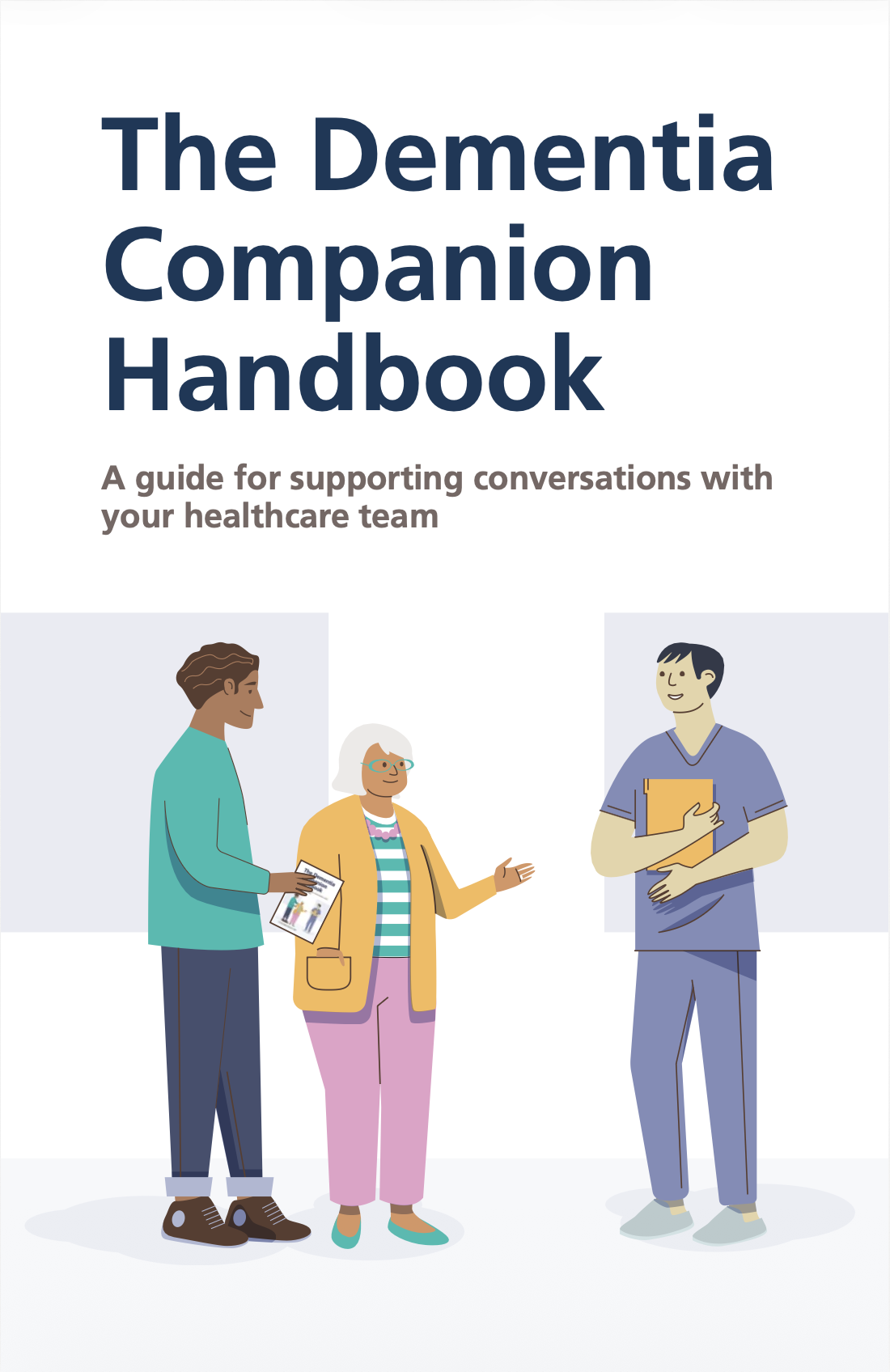
Dementia Companion Handbook
This guide is designed to help you learn about the changes that occur while living with dementia. You may experience changes that affect your ability to complete thoughts, find words, and remember information and directions. This guide was developed to help you track and write down any important information that you learn from your healthcare visits.
-
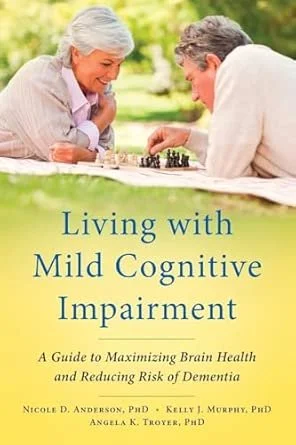
The Insider’s Guide to Dementia Care
The book also provides practical and effective memory strategies, using patient stories to illustrate the real-life issues facing people living with MCI. The book includes "Questions to Ask Your Doctor," recommended readings, links to relevant Web pages, and worksheets to guide readers through healthy lifestyle change. This second edition contains 52 accessible chapters with a new chapter on sex differences to summarize the growing knowledge of its importance in health and treatment of MCI. As advances in research continue to evolve, this book will continue to be essential reading for those impacted by MCI.
-
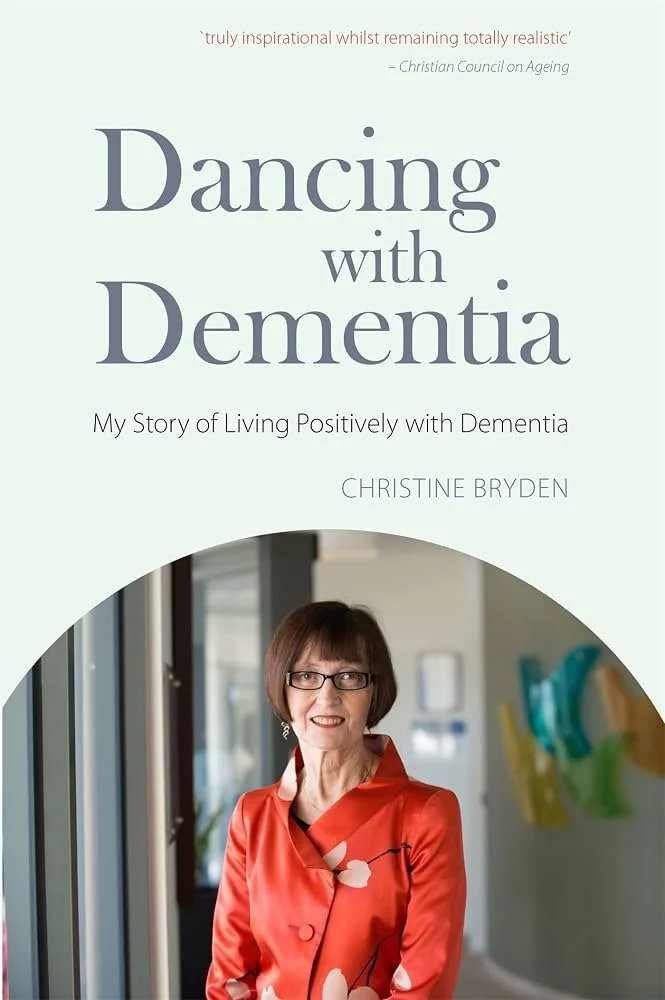
Dancing with Dementia: My Story of Living Positively with Dementia
Christine Bryden was a top civil servant and single mother of three children when she was diagnosed with dementia at the age of 46. Since then she has gone on to challenge almost every stereotype of people with dementia by campaigning for self-advocacy, writing articles and speaking at national conferences. This book is a vivid account of the author's experiences of living with dementia, exploring the effects of memory problems, loss of independence, difficulties in communication and the exhaustion of coping with simple tasks. She describes how, with the support of her husband Paul, she continues to lead an active life nevertheless, and explains how professionals and carers can help. Christine Bryden makes an outspoken attempt to change prevailing attitudes and misconceptions about the disease. Arguing for greater empowerment and respect for people with dementia as individuals, she also reflects on the importance of spirituality in her life and how it has helped her better understand who she is and who she is becoming. Dancing with Dementia is a thoughtful exploration of how dementia challenges our ideas of personal identity and of the process of self-discovery it can bring about.
-

Somebody I used to know
As Mitchell learned to embrace her new life, she began to see her condition as a gift, a chance to experience the world with fresh eyes and to find her own way to make a difference. Even now, her sunny outlook persists: She devotes her time to educating doctors, caregivers, and other people living with dementia, helping to reduce the stigma surrounding this insidious disease.
Still living independently, Mitchell now uses Post-it notes and technology to remind her of her routines and has created a “memory room” where she displays photos—with labels—of her daughters, friends, and special places. It is a room where she feels calm and happy, especially on days when the mist descends. -
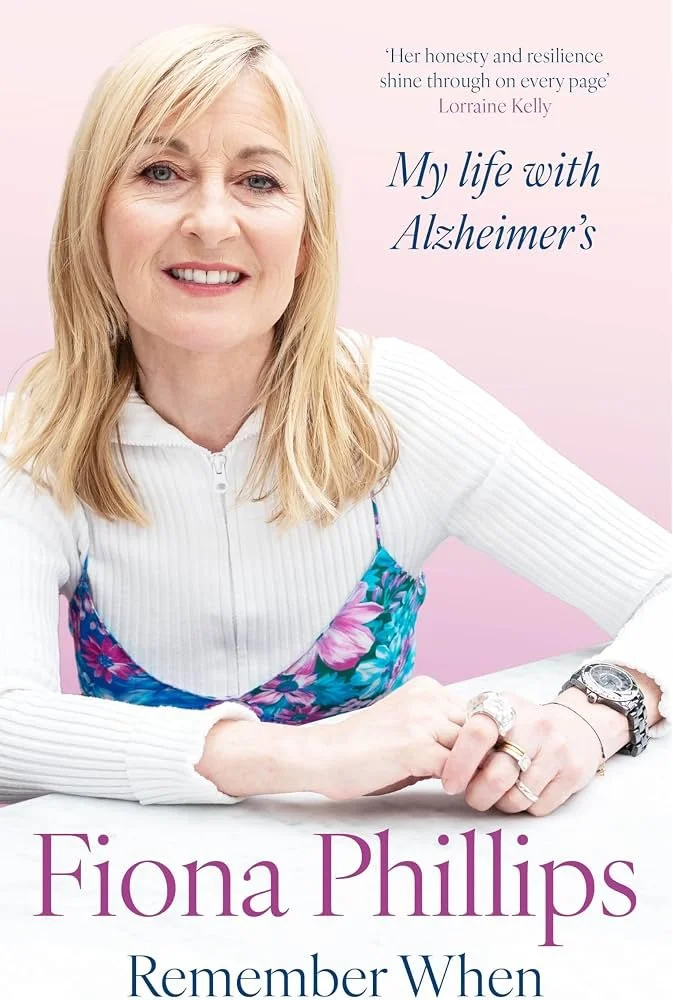
Remember When: My Life with Alzheimer's
Much-loved broadcaster Fiona Phillips was sixty-one when she discovered that she had early-onset Alzheimer’s disease. She had cared for her parents who had both suffered from the disease and now she was facing the same heartbreaking diagnosis – under no illusions about what it would mean for her and her family.
With courage and determination, Fiona set out to chronicle what was happening to her in the hope that her book would help others. From the tiny first warning signs – the inability to concentrate and the ‘brain fog’ she wrote off as the menopause – to the gradual loss of her memories and her growing confusion, she reveals how the disease progresses and how she copes. She also shares her experiences with the NHS and the systems that may seem hard for patients and their families to navigate. -
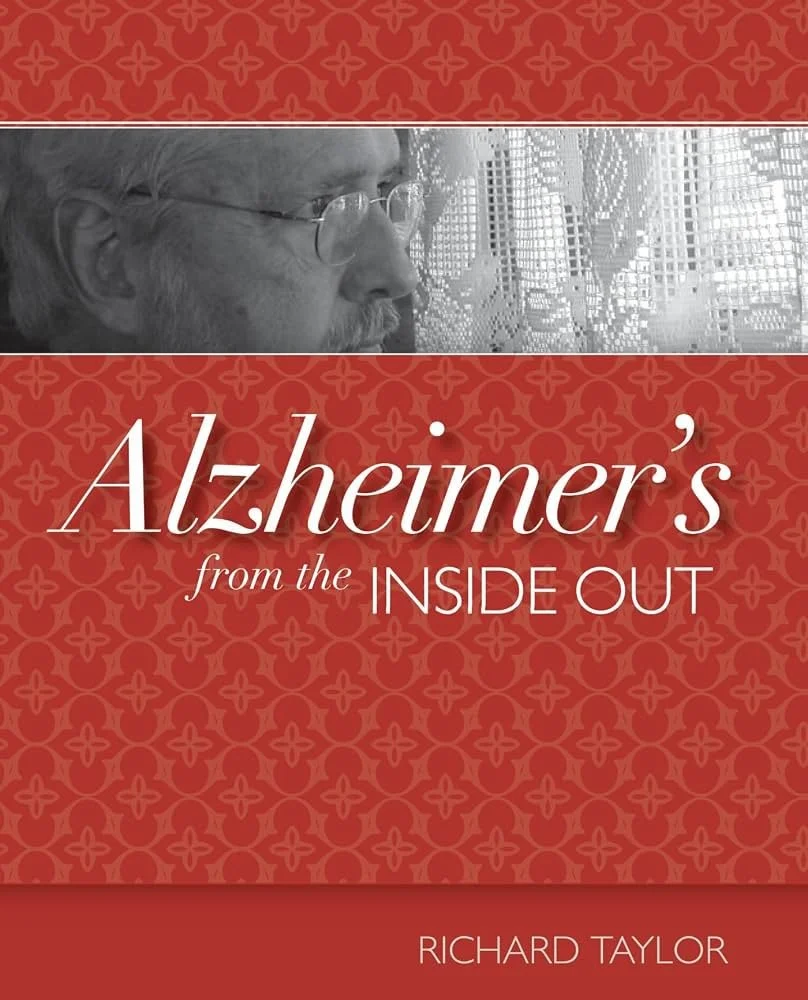
Alzheimer's from the Inside Out
Thoughtful and self-reflective, this collection of illuminating essays offers a rare glimpse into the often incomprehensible world of individuals living with Alzheimer's disease. Diagnosed at age 58, psychologist Richard Taylor shares a provocative and courageous account of his slow transformation and deterioration, and of the growing divide between his reality and the reality of others.
With poignant clarity, candor, and humor, Taylor addresses the complexity and emotions surrounding issues such as the loss of independence and personhood, unwanted personality shifts, the struggle to communicate, changing relationships with loved ones and friends, continuous declines in ability to perform familiar tasks, and never-ending uncertainty about the future. -
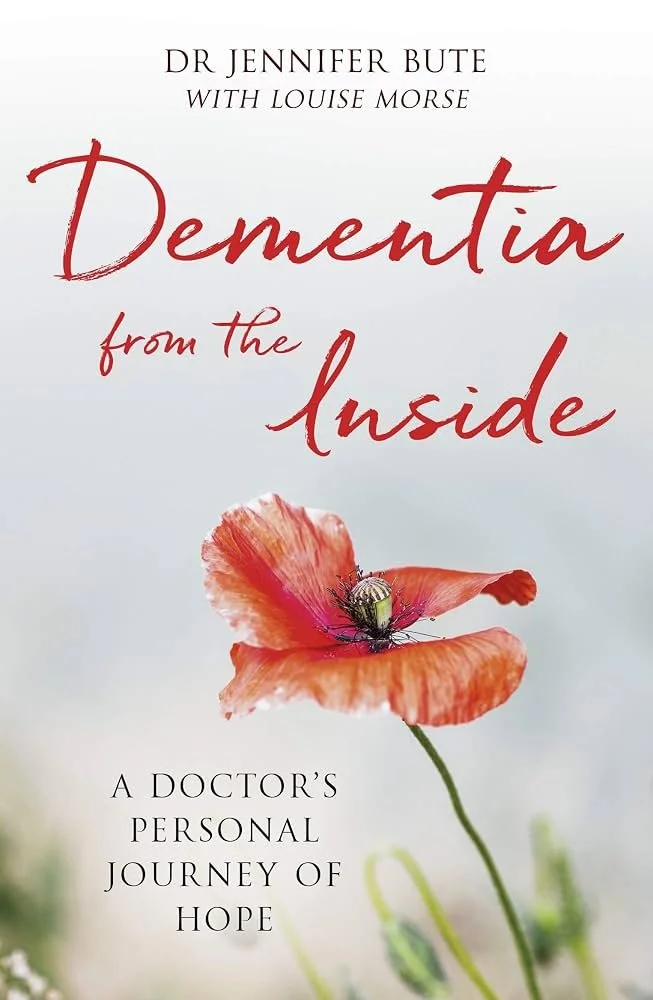
Dementia from the Inside: A Doctor's Personal Journey to Hope
After resigning as a GP, she resolved to explore what could be done to slow the progress of dementia. The aim of this practical book is to help people who are living with dementia and to give hope to those who are with them on the dementia journey. Jennifer believes that her dementia is an opportunity as well as a challenge. Her important insights are that the person 'inside' remains and can be reached, even when masked by the condition, and that
spirituality rises as cognition becomes limited.
Get Involved with the TDC Co-Lab
Thanks for your interest! The two main ways to get involved are to:
Participate in a research study.
Become a community research partner.
If you’re interested in participating in a study, click here to learn about current projects.
If you’re interested in becoming a community research partner, you can click here to learn more about what a community research partner is and how to connect with us about this opportunity.